


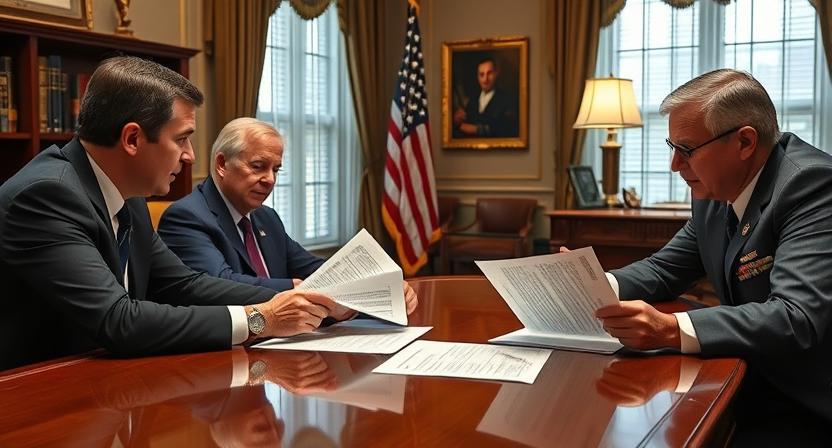
The US Department of Defense Policy Updates mark a significant evolution in how America approaches defense, diplomacy, and security in the 21st century. With shifting global alliances, emerging technologies, and hybrid warfare threats, the Department of Defense (DoD) continues to revise its policies to maintain strategic superiority and secure US interests at home and abroad. These updates demonstrate the Pentagon's commitment to modernization, transparency, and cooperation across military and civilian sectors.
Strategic Realignment and National Defense Priorities
The DoD's latest policy updates emphasize the need to adapt to an increasingly multipolar world. Traditional threats are being replaced by asymmetric warfare, cyberattacks, and disinformation campaigns. To address this, the Pentagon has adopted a flexible, multi-domain defense approach that integrates land, air, sea, cyber, and space capabilities under a unified command strategy.
Key priorities include strengthening deterrence in the Indo-Pacific region, supporting NATO allies in Europe, and countering emerging adversaries through sustained innovation and intelligence cooperation.
Emphasis on Technological Innovation
Technology remains at the heart of new defense policies. The DoD is accelerating the adoption of artificial intelligence, quantum computing, and autonomous systems to stay ahead of peer competitors. Initiatives such as Project Maven and JADC2 (Joint All-Domain Command and Control) are reshaping how U.S. forces collect, analyze, and act upon real-time data.
Moreover, the department’s Defense Innovation Unit (DIU) works closely with private sector innovators to integrate cutting-edge technologies into military applications — bridging the gap between Silicon Valley and the Pentagon.
Cybersecurity and Information Integrity
The cyber domain is now as critical as any battlefield. New DoD policies focus on strengthening cyber defenses, safeguarding data integrity, and countering influence operations. The U.S. Cyber Command’s expanded mandate allows for proactive cyber defense — including identifying and neutralizing threats before they reach critical infrastructure.
Additionally, policies emphasize resilience against misinformation and foreign propaganda, ensuring the American public remains informed and protected against manipulation.
Space Defense and the Role of the U.S. Space Force
A key aspect of modern defense policy is space security. The U.S. Space Force, established in 2019, continues to grow under updated policy directives. It now plays a vital role in ensuring the safety of satellites, global communications, and missile detection systems.
Recent updates call for greater international collaboration in space governance, deterrence of hostile space activity, and protection of assets critical to both military and civilian operations.
Defense Diplomacy and Global Partnerships
Policy updates highlight that diplomacy and defense must work hand in hand. The DoD is expanding its cooperative engagements through joint training programs, technology exchanges, and humanitarian missions. Strategic alliances such as NATO, QUAD, and AUKUS are central to maintaining global peace and deterring aggression.
Furthermore, the U.S. continues to support defense reform programs in developing nations, helping allies build capacity for self-defense and crisis response.
Personnel, Diversity, and Mental Health Initiatives
Recent DoD policy reforms also address the human side of defense. The department recognizes that its strength lies in its people. New initiatives focus on improving mental health support, addressing recruitment challenges, and ensuring equitable opportunities across all ranks.
The DoD’s Diversity, Equity, and Inclusion (DEI) framework promotes unity and cultural competence within the armed forces. Enhanced family support programs and veteran transition services are also prioritized to ensure service members and their families receive the care and respect they deserve.
Sustainability and Climate Resilience Policies
Environmental security has emerged as a critical pillar of national defense. Updated DoD policies integrate sustainability into operational planning, base construction, and logistics. The Pentagon's Climate Adaptation Plan outlines measures to mitigate the impact of rising sea levels, extreme weather, and resource shortages on global security.
Investments in renewable energy and eco-friendly technologies not only reduce costs but also improve operational efficiency across military installations.
Transparency, Accountability, and Oversight
Public trust is fundamental to effective defense governance. New policies mandate greater transparency in defense spending, acquisition programs, and operational outcomes. The DoD is implementing stricter audit systems and expanding congressional oversight to ensure fiscal responsibility.
Additionally, ethical guidelines for defense contractors and personnel are being strengthened to prevent corruption, waste, and conflicts of interest.
Emerging Threats and Future Policy Outlook
The DoD's forward-looking policy framework is designed to counter a broad spectrum of threats — from terrorism and cyber warfare to biotechnological risks. As global security evolves, so will US defense policy, focusing on deterrence through strength, innovation, and cooperation.
Future priorities include deeper investments in AI-driven intelligence systems, robust space-based defense networks, and comprehensive global readiness programs to ensure the US military remains adaptable and dominant.
Frequently Asked Questions (FAQ)
1. What are the main goals of the new DoD policy updates?
The updates aim to modernize defense capabilities, strengthen global alliances, and ensure readiness against new-age threats like cyber warfare and rumors.
2. How is technology influencing US defense policy?
Artificial intelligence, automation, and advanced data systems are revolutionizing decision-making and operational efficiency across all military branches.
3. What role does the Space Force play in current defense policy?
The Space Force ensures satellite protection, global communication security, and rapid response to threats in outer space.
4. How is the Pentagon addressing environmental challenges?
Through its Climate Adaptation Plan, the DoD promotes renewable energy, sustainable logistics, and resilient infrastructure against climate change.

 English
 French
 Spanish
 Portuguese
 Deutsch
 Turkish
 Dutch
Dutch
 Italiano
 Russian
 Romaian
 Portuguese (Brazil)
 Tiếng Việt