


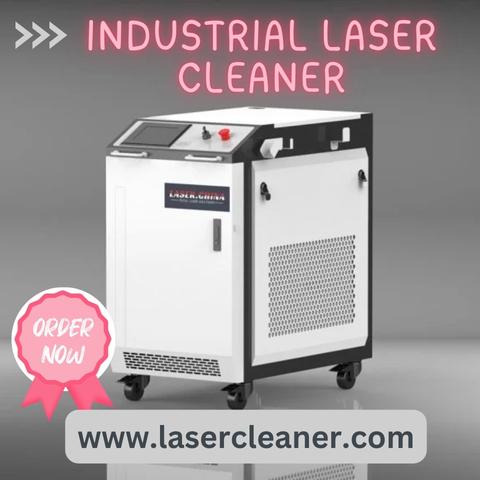
For decades, industrial maintenance and surface preparation have been dominated by traditional methods. From abrasive blasting and chemical solvents to manual grinding and scraping, these techniques, while familiar, come with a significant baggage of drawbacks. They are often labor-intensive, generate substantial waste, pose health risks to operators, and can even damage sensitive substrate materials. The quest for a more efficient, precise, and environmentally conscious solution has been a constant in the manufacturing and restoration sectors. This quest has now been answered with the advent of a groundbreaking technology: the Industrial Laser Cleaner. This innovative tool is not merely an improvement; it represents a fundamental shift in how industries approach cleaning tasks, offering a contactless and powerful alternative that is setting new standards for quality and safety. At LaserCleaner, we are at the forefront of this revolution, providing state-of-the-art systems that empower businesses to step into the future of maintenance.
Understanding the Technology Behind the Beam
So, what exactly is an Industrial Laser Cleaner? At its core, it is a device that utilizes high-energy pulsed laser beams to remove contaminants from a surface. The process is remarkably sophisticated yet elegantly simple. The laser emits short pulses of light that are absorbed by the surface layer of the contaminant—be it rust, paint, oil, oxide, or coating. This rapid absorption of energy causes the contaminant to vibrate at an atomic level, leading to its instantaneous ablation or sublimation. In simpler terms, the unwanted material is turned directly from a solid into a gas, vanishing from the surface without a trace. The underlying substrate, however, remains completely unaffected because its material properties reflect the laser light rather than absorbing it. This selective ablation is the magic behind the Industrial Laser Cleaner, allowing for the meticulous removal of the thinnest coatings or the most stubborn layers of rust without compromising the integrity of the base metal, whether it's delicate aluminum, hardened steel, or historical artifacts.
Transforming Diverse Industrial Landscapes
The applications for this technology are as vast as industry itself. The versatility of the Industrial Laser Cleaner makes it an indispensable tool across a wide spectrum of fields. In the automotive and aerospace sectors, it is used for precision cleaning of mold tools, engine components, and airframe parts, ensuring perfect surfaces for subsequent processes like welding or bonding. The heavy machinery and maritime industries leverage its power to strip away years of corrosion and protective coatings from large structures like ship hulls, storage tanks, and structural steel, preparing them for recoating with an ideal surface profile. Furthermore, the restoration and conservation field has found a powerful ally in the Industrial Laser Cleaner. Museums and restoration specialists use it to gently clean statues, historical monuments, and delicate machinery without the risk of erosion or damage associated with mechanical methods. This wide-ranging applicability underscores the transformative nature of laser cleaning technology, making it a single solution for countless surface challenges.
The LaserCleaner Commitment to Excellence
Embracing this technology means more than just purchasing a piece of equipment; it means investing in a new operational philosophy. At LaserCleaner, we understand that each industrial challenge is unique. Our commitment is to provide not just a product, but a comprehensive solution tailored to our clients' specific needs. Our range of Industrial Laser Cleaner systems is designed with the operator in mind, focusing on user-friendliness, reliability, and unmatched performance. We pride ourselves on the robust construction and advanced engineering of our machines, ensuring they can withstand the rigors of daily use in demanding industrial environments. By choosing a system from LaserCleaner, you are partnering with a brand dedicated to innovation and customer success, ensuring your operations are cleaner, safer, and more efficient.
Operational Efficiency and Environmental Stewardship
One of the most compelling aspects of integrating an Industrial Laser Cleaner into your workflow is the profound impact on operational efficiency and environmental responsibility. Unlike traditional methods that require extensive setup, containment, and cleanup, laser cleaning is a dry process. There are no consumables like sand or chemicals to purchase, store, or dispose of. The only waste generated is the removed contaminant, which is captured by an integrated filtration system, making disposal simpler, safer, and far less costly. This eliminates the risk of secondary pollution and significantly reduces the environmental footprint of cleaning operations. Moreover, the speed and precision of the Industrial Laser Cleaner drastically reduce project timelines. What used to take days of laborious work can now be accomplished in a fraction of the time, freeing up skilled personnel for more critical tasks and minimizing equipment downtime. This synergy of speed, cleanliness, and cost-effectiveness creates a powerful return on investment that goes beyond simple machinery acquisition.
Final Thoughts
The shift towards laser technology in industrial maintenance is no longer a glimpse into the future; it is a present-day reality that is reshaping industry standards. The Industrial Laser Cleaner stands as a testament to human ingenuity, offering a solution that is simultaneously powerful and gentle, efficient and environmentally sound. It addresses the core challenges of traditional methods while unlocking new possibilities for precision and quality. As industries worldwide continue to seek smarter, safer, and more sustainable ways to operate, the role of laser cleaning will only become more central. It represents a clear path forward—a path defined by technological advancement and a commitment to superior results. For any organization looking to modernize its maintenance protocols and gain a competitive edge, the decision to adopt this technology is not just an upgrade; it is a strategic move towards a more innovative and productive future.

 Arabic
 French
 Spanish
 Portuguese
 Deutsch
 Turkish
 Dutch
Dutch
 Italiano
 Russian
 Romaian
 Portuguese (Brazil)
 Tiếng Việt