


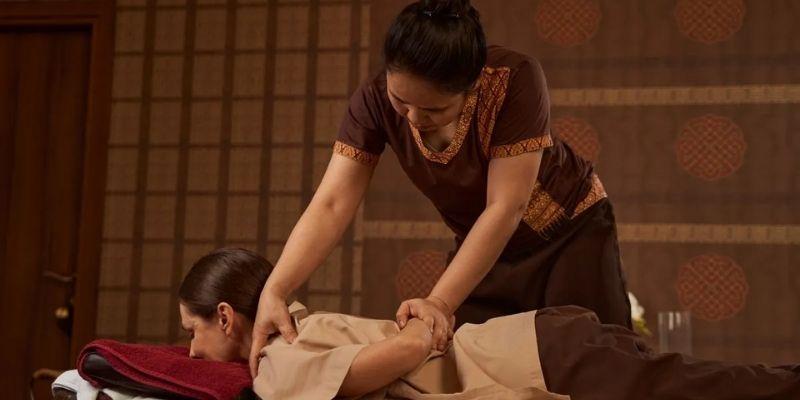
When stretching stops delivering results, the body usually isn’t resisting because of a lack of effort; it is resisting because tension, alignment, and movement patterns have shifted in ways that stretching alone can’t unravel. Many people reach a frustrating plateau where their hamstrings stay tight despite daily stretching, their hips feel locked regardless of mobility drills, or the upper body continues to stiffen even with dedicated warm-ups. Thai massage offers a different pathway. Instead of asking the body to stretch itself into more space, it works with the body through assisted movements, rhythmic pressure, and mindful sequencing that encourage flexibility to return from within. This approach feels less like forcing and more like guiding the body back into its natural range. When done in a dedicated therapeutic setting, it helps create an experience of mobility that is grounded, fluid, and surprisingly accessible. Within that context, the work can complement what people try to achieve through stretching but cannot reach on their own.
Assisted Stretches
Traditional stretching depends on the body’s ability to lengthen itself using internal strength, which often creates compensation. When one area is tight, another tries to support the movement, preventing full release. Thai massage bypasses this by providing external support from the practitioner. With the body fully relaxed, assisted stretches target deep lines of tension without triggering resistance. The practitioner guides the limbs through angles and ranges that are difficult to access alone, whether it’s opening the hips, decompressing the spine, or lengthening the hamstrings through controlled leverage.
This assistance reduces the instinct to hold, brace, or push into the stretch. The body becomes more responsive to lengthening because it doesn’t feel the need to stabilize itself. As the muscles relax under guided movement, their natural elasticity starts to return. People often report that areas which felt rigid during self-stretching suddenly feel more accessible. Instead of forcing a position, they are moved into it slowly, intuitively, and with attention to how the body responds. This helps build a foundation of flexibility that feels earned rather than strained.
Breath-Guided Mobility
Stretching can fail when breath and movement are out of sync. Most people hold their breath when working through tightness, which signals the body to stay tense. Thai massage incorporates rhythmic compression and assisted motion that naturally syncs breath with mobility. Practitioners often use a steady flow press, hold, release to cue the body into a calmer state, allowing deeper mobility work to unfold without force.
This rhythm trains the nervous system to soften its response to tension. Limbs move with the breath rather than against it, making each stretch more intentional and less abrupt. The spine rotates more smoothly, the hips open with less resistance, and the shoulders soften into wider arcs. Breath-guided mobility also helps the body understand the difference between effort-based stretching and receptive release.
As the body settles into this synchronized state, movement becomes more fluid. People exploring Thai Massage in Chennai often find that once the breath joins the movement, old patterns of tightness begin to shift. It’s not about stretching harder, it's about creating the conditions for mobility to reappear.
Joint Decompression
Sometimes stretching fails because the issue isn’t in the muscles, it's in the compression around the joints. When joints feel crowded or restricted, the surrounding muscles tighten to protect them, creating a cycle that stretching cannot fix. Thai massage incorporates gentle traction, rotational movements, and rhythmic loosening that create space within the joints. This decompression is subtle but powerful.
By easing the pressure surrounding areas like the hips, shoulders, spine, and ankles, the muscles no longer need to grip as tightly. As the joints regain their natural glide, movements that once felt stiff suddenly feel more available. This is especially noticeable in the lower back and hips, where decompression allows the pelvis to move more naturally, something traditional stretching cannot directly achieve.
Many people experience an immediate sense of lightness, as if the body has regained a forgotten ease. The fluidity that follows isn’t forced; it’s a result of structural space returning to areas that had been locked for years. Over time, this decompression supports a broader range of movement, making daily mobility feel smoother and more spacious.
Overall Flow
Flexibility is the ability of the complete body to move as a cohesive system, not only the extent to which a muscle can stretch. Sequences that combine pressure, stretching, rocking, and passive movement into a continuous flow are the foundation of Thai massage. The body is re-educated by this movement-based rhythm, which teaches it to transition from stiffness to more fluid, coordinated action.
When the body experiences this flow, it becomes easier to move without overthinking. Tightness in one area no longer steals movement from another. The spine participates with more ease, the hips rotate without resisting, and the shoulders move with less guardedness. Over time, the body begins to adopt these patterns naturally.
Many people who receive Thai Massage in Velachery describe a renewed sense of connectedness in their movement. They feel less segmented and more integrated, an essential piece of flexibility that stretching alone rarely achieves.
This reintegration is one of the most profound outcomes of Thai massage: the body learns to move as a whole, not as a collection of tight parts.
Why Stretching Alone Stops Working
Reaching a flexibility plateau is common. Even people who stretch diligently often notice their gains stall or reverse over time. This usually happens because:
-
The body compensates instead of releasing
-
The breath disrupts the stretch rather than supporting it
-
Joints lose space and mobility
-
Core muscle lines tighten to maintain stability
-
Movement becomes segmented rather than fluid
-
The nervous system anticipates discomfort and resists
Thai massage works around these limitations by removing the need to self-stabilize, guiding the body through ranges without forcing, and creating the structural conditions where flexibility can return. It becomes a partnership between practitioner and receiver rather than a solo attempt to push the body into more space.
Over multiple sessions, these shifts accumulate. People begin to stretch with greater ease, move with fewer restrictions, and experience mobility that feels natural rather than effortful. The process then extends into daily life walking, sitting, reaching, and rotating all become smoother. Flexibility starts to feel like a built-in function again, not a chore to maintain.
A Restorative Path Toward Functional Flexibility
For those who have tried every stretch, every routine, and every mobility drill, Thai massage offers a refreshing alternative. It supports the body in a way that feels collaborative rather than demanding. The practitioner does the guiding; the body does the receiving. As the system relaxes into these movements, it becomes easier to reclaim lost range, rebuild natural alignment, and move with more fluidity.
This kind of flexibility is functional: it supports everyday activities, exercise, posture, and general ease. It becomes a sustainable shift rather than a temporary gain. Many people describe the experience as a return to how their body is meant to feel.
Within that unfolding, environments that honor slow, intuitive movement make a profound difference. A place like Le Bliss Spa becomes a setting where the body can soften, open, and reawaken its natural flexibility through skilled Thai techniques.

 English
 Arabic
 French
 Spanish
 Portuguese
 Turkish
 Dutch
Dutch
 Italiano
 Russian
 Romaian
 Portuguese (Brazil)
 Tiếng Việt