


Imagine a bustling family in a sun-drenched suburban home, where mornings kick off with the whirl of blenders and the hum of coffee makers, only to fade into quiet afternoons before evening lights flicker on for dinner and homework. For years, their south-facing solar array sat idle during these peak hours, churning out excess power at noon that disappeared into the grid for pennies. Frustrated by rising utility bills despite their green investment, they stumbled upon a revelation during a late-night scroll: East-West Solar Panels. This innovative twist promises not just more panels in the same space, but energy that dances to the rhythm of their lives—bright mornings, steady afternoons, and glowing evenings. What began as a skeptical consultation ended in a transformative installation, turning their home into a self-sufficient haven that captured the sun's full arc. This story isn't unique; it's the dawn of a smarter solar era.
Understanding East-West Solar Panels
The Fundamentals of East-West Configurations
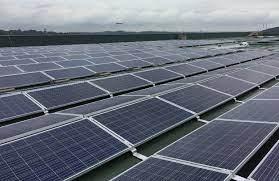
East-West Solar Panels represent a departure from the conventional south-facing arrays that have dominated the photovoltaic landscape. In this setup, panels are oriented along an east-west axis, often mounted back-to-back in a dual-tilt or vertical arrangement. This allows them to capture the sun's path from sunrise to sunset more evenly, rather than concentrating output during midday hours. Ideal for rooftops facing east and west or flat surfaces, these systems leverage bifacial technology—where panels generate power from both sides—to boost efficiency by reflecting ground light upward. By aligning with the sun's horizontal traverse, East-West Solar Panels minimize shading between rows and maximize usable space, making them a versatile choice for modern installations.
How They Compare to Traditional South-Facing Systems
Traditional south-facing panels, tilted at an optimal angle toward the equator, excel in total annual energy yield, producing often up to 20-30% more kilowatt-hours per panel due to direct midday exposure. However, this creates a "bell curve" production profile that mismatches typical household or grid demands, leading to overproduction when prices are low and shortages during evenings. In contrast, east-west configurations flatten this curve, delivering a wider, more consistent output. While individual panel efficiency might dip by 10-15%, the ability to pack more modules into the same footprint often results in comparable or superior overall system performance, especially in space-limited environments.
Key Benefits of East-West Solar Configurations
Boosting Self-Consumption and Reducing Grid Reliance
One of the standout advantages of east-west solar setups is their synergy with daily energy use patterns. Households consume about 40% more power in mornings and evenings for appliances, lighting, and EV charging, yet south-facing systems underdeliver here. East-west orientations flip the script, generating up to 25% more usable energy during these windows, slashing the need for battery storage and cutting utility costs by promoting direct on-site consumption. For families like the one in our opening story, this means fewer dollars flowing to the grid and more control over their energy destiny.
Optimizing Space and Land Use Efficiency
In an era of urban sprawl and premium real estate, east-west designs shine by cramming more panels into confined areas. Ground-mounted systems can achieve ground coverage ratios exceeding 50%, compared to 30-40% for south-facing arrays, allowing developers to generate 20-50% more megawatts per acre. On rooftops, this translates to installing double the modules without expanding the structure, perfect for commercial buildings or homes with awkward rooflines. Bifacial panels amplify this further, harvesting albedo from surrounding surfaces for an extra 10-15% yield boost.
Aligning with Evolving Energy Markets and Time-of-Use Rates
As utilities roll out time-of-use (TOU) pricing—where evening electricity costs 2-3 times midday rates—east-west systems position owners to profit. By shifting production to high-value hours, they can yield 15-20% better financial returns, even if total kWh is slightly lower. This market alignment is crucial in regions like California or Europe, where negative midday pricing erodes south-facing incentives. Moreover, their lower profile reduces wind loads by up to 30%, lowers installation and maintenance expenses while enhancing durability in stormy climates.
Ideal Applications and Installation Insights
Residential and Commercial Roof Integrations
For homeowners with east- or west-facing roofs, these configurations are a no-brainer, often outperforming suboptimal south tilts. Flat-roof installations use low-slope racking (10-45 degrees) to mimic the effect, while vertical bifacial walls suit urban facades or carports. Pro tip: Pair with smart inverters for dynamic shading avoidance, ensuring peak performance year-round.
Scaling Up for Utility-Scale Projects
In large-scale deployments, east-west racking like GameChange Solar's MaxSpan enables "tent-like" arrays that stack panels three-high, slashing land costs by 40% in constrained sites. Near-equatorial farms benefit most, where high sun angles minimize losses, and the steady output eases grid integration without clipping risks.
Addressing Potential Drawbacks
No solar solution is flawless. East-West Solar Panels may underperform in total yield by 10-20% versus ideal south-facing setups in unshaded, high-latitude spots, potentially extending payback slightly periods. Shading from nearby structures demands careful site assessment, and upfront racking costs can run 5-10% higher for specialized dual-tilt systems. Yet, with panel prices plummeting—down 89% since 2010—these hurdles fade, especially when factoring in long-term savings.
Conclusion
The shift to East-West Solar Panels marks a pivotal evolution in how we harness solar energy, blending innovation with practicality to meet the demands of modern life. By aligning energy production with daily consumption peaks, optimizing limited space, and capitalizing on dynamic energy markets, these systems empower homes, businesses, and utilities alike to maximize their solar investment. For the family in our story—and millions of others—the switch meant more than savings; it was a reclaiming of energy independence, a step toward a sustainable future where the sun's journey fuels every moment. As solar technology advances, embracing east-west configurations offers a balanced, resilient path to a greener world, proving that sometimes, the smartest solutions rise and set with the sun itself.

 English
 Arabic
 French
 Spanish
 Portuguese
 Deutsch
 Turkish
 Dutch
Dutch
 Italiano
 Romaian
 Portuguese (Brazil)
 Tiếng Việt