


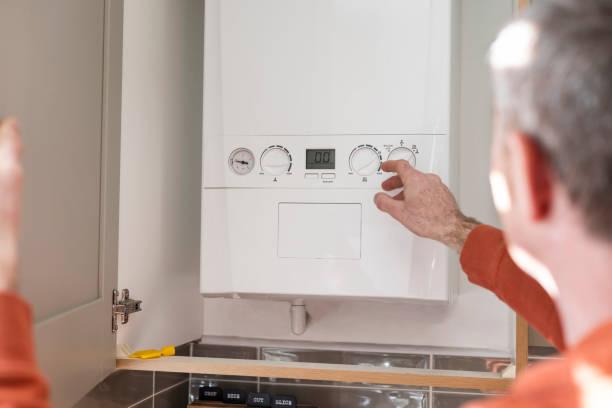
A combi boiler heats water on demand, no storage tank, no waiting, no wasted space. It's why 54% of UK households have one installed.
But is it right for your home? That depends entirely on how you use hot water, and frankly, most homeowners get this decision wrong.
What Is a Combi Boiler?
Think of it as your heating system's multitasker. A combination boiler handles both central heating and domestic hot water from a single compact unit. No separate cylinder cluttering your airing cupboard. No cold water tank in the loft.
The brilliance? It pulls cold water straight from the mains and heats it instantly when you turn on a tap. Mains pressure delivery. Zero storage. Maximum efficiency.
Traditional systems? They're relics. Free Combi boiler dominates the UK market for good reason—they're smarter, cleaner, and far more space-efficient.
How Does a Combi Boiler Actually Work?
Here's where engineering meets elegance. Two heat exchangers operate within one unit. Simple.
The primary exchanger circulates heated water through your radiators. The secondary exchanger handles your taps and showers, drawing mains water and heating it instantaneously. When you open a hot tap, a diverter valve redirects the heat from radiators to domestic hot water.
Can you run both simultaneously? No. The valve prioritizes hot water—your radiators wait. This happens in milliseconds, though you might hear a slight click.
Modern units use condensing technology to reclaim heat from exhaust gases. That wasted heat pre-warms incoming cold water, pushing efficiency ratings to 90-98%. It's thermodynamics working exactly as it should.
Some models pre-heat a small water reserve throughout the day. The result? Instant hot water the moment you turn the tap. No lag. No temperature fluctuation.
Advantages: Why Combi Boilers Dominate
Space Efficiency
No external tanks. No cylinders. Just one wall-mounted unit that fits inside a kitchen cupboard. For flats and smaller homes, this is non-negotiable.
Energy Efficiency That Actually Matters
Here's what separates modern combis from legacy systems:
| Boiler Type | Efficiency Rating | Annual Savings |
| Old non-condensing | 60-70% | £0 (baseline) |
| Modern combi | 90-98% | £300-500/year |
You heat water only when needed. No standing losses. No reheating. Just on-demand precision that translates to lower bills.
Instant Hot Water at Mains Pressure
Turn the tap. Hot water flows immediately. Strong pressure. Consistent temperature. No waiting for tanks to refill or reheat.
For busy households? This is transformative.
Cost-Effective Installation
Installation ranges from £1,200 to £4,000 depending on complexity. A straightforward combi-to-combi swap? One to two days, minimal disruption. Converting from a traditional system costs more but eliminates obsolete infrastructure.
Cleaner, Safer Water
Your hot water comes directly from the mains—never sitting in a stagnant tank. No Legionella risk. No contamination concerns. Fresh water, every time.
Disadvantages: Where Combis Fall Short
Let's be brutally honest about the limitations.
Multiple Outlets? Forget It
Run a bath and shower simultaneously? The flow rate collapses. Pressure drops. Temperature fluctuates. The boiler splits available water between outlets, and both suffer.
For households with multiple bathrooms and simultaneous usage patterns, a combi is fundamentally inadequate. System boilers with cylinders handle this effortlessly.
Mains Pressure Dependency
Low mains pressure in your area? Your combo will deliver a disappointing trickle. Check your property's water pressure before installation; most installers won't.
Zero Backup When It Fails
Boiler breaks? No hot water. Period. Traditional systems with immersion heaters provide backup. Combis don't. You're entirely dependent on rapid repairs.
Power Showers Are Incompatible
Pumped power showers require stored water. Combis deliver mains pressure only. Mixing the two creates system conflicts. If you demand a power shower, look elsewhere.
Choosing the Right Size: Output Matters
Size isn't physical dimensions, it's kilowatt output. Get this wrong and you've wasted thousands.
| Property Size | Radiators | Required Output |
| 1-2 bedrooms | Up to 10 | 24-27 kW |
| 3-4 bedrooms | 10-15 | 28-34 kW |
| 4+ bedrooms | 15+ | 35-43 kW |
Undersized boilers struggle during peak demand. Oversized units have short cycle times, reducing efficiency and component lifespan. Your installer should perform a proper heat loss calculation, not guess based on room count.
Best Brands Worth Specifying
-
Worcester Bosch: Market leader, robust build, excellent support
-
Vaillant: German engineering, quiet operation, premium efficiency
-
Viessmann: Stainless steel exchangers, 98% efficiency models
-
Ideal: Solid mid-range option, competitive pricing
-
Baxi: Budget-friendly without compromising reliability
Lifespan and Maintenance: The Reality Check
Expect 10-15 years from a quality combi with proper maintenance. Some units reach 20 years. Most die prematurely from neglect.
Annual Servicing Is Non-Negotiable
Gas Safe engineer. Every year. Costs around £99. This maintains warranty validity, ensures safety, and preserves efficiency.
During service, engineers inspect components, test safety devices, clean exchangers, and check ventilation. Skip this? Your efficiency degrades rapidly, and warranty claims get rejected.
Monthly Homeowner Checks
-
Pressure gauge: Should read 1-2 bar (green zone)
-
Visual leaks: Check pipes and connections
-
Radiator bleeding: Remove trapped air causing cold spots
-
Unusual noises: Kettling, gurgling, or banging indicate problems
Common Problems and Replacement Signals
Frequent Issues
Low pressure: System leaks or faulty relief valves
Kettling: Limescale buildup is creating rumbling noises
No hot water: Damaged airlocks, faulty thermostats, broken diaphragms
Frozen condensate pipes: Winter shutdowns with error codes
When to Replace, Not Repair
Age over 15 years? Replace it. Older boilers hemorrhage efficiency despite lower output. You're burning money.
Other replacement triggers:
-
Frequent breakdowns requiring repeated callouts
-
Yellow pilot flame (incomplete combustion risk)
-
Visible corrosion or rust
-
Dramatically rising bills with unchanged usage
Modern replacements pay for themselves through efficiency gains—often £300-500 annually.
The Bottom Line
A combi boiler might be perfect for small to medium homes (1-4 bedrooms), properties with 1-2 bathrooms, or households where hot water outlets aren't used simultaneously. Space-constrained flats and apartments can also make good use of these heating systems.
Wrong choice for:
-
Large properties with 3+ bathrooms
-
Families with simultaneous shower demands
-
Areas with poor mains water pressure
-
Anyone wanting power showers
The decision isn't about preference; it's about usage patterns and infrastructure. A qualified installer should assess your specific needs, not sell you what's easiest to install.
FAQ
Can a combo run a bath and shower simultaneously?
No. Flow splits between outlets, reducing pressure and temperature at both. For simultaneous use, specify a system boiler with a cylinder.
What's the installation cost?
£1,200-£4,000 total. Combi-to-combi replacement: £1,200-£3,500. System-to-combi conversion: £2,500-£4,500 due to pipework modifications.
Do combis work with solar panels?
Electric combis integrate with solar PV through your home's electrical system. Gas combis can work with solar thermal if they accept pre-heated water—requires additional components. Verify compatibility first.
What is the most efficient Combi Boiler model?
Viessmann Vitodens 200-W at 98% efficiency. Worcester Bosch Greenstar 8000+ and Vaillant ecoTEC Plus also exceed 94%. All modern condensing combis achieve 90%+ efficiency minimum.

 English
 Arabic
 French
 Spanish
 Portuguese
 Deutsch
 Turkish
 Dutch
Dutch
 Italiano
 Russian
 Romaian
 Tiếng Việt