


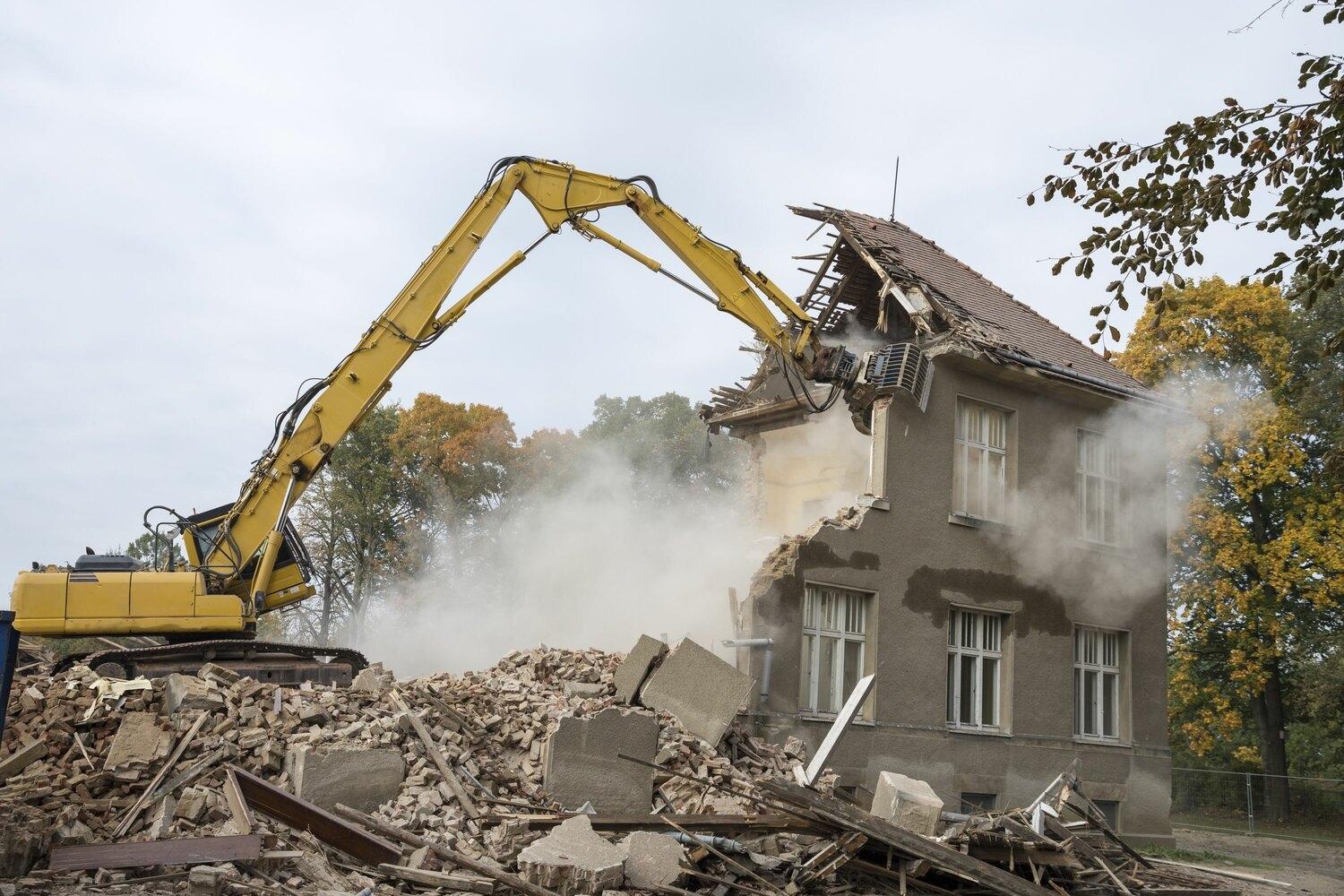
For homeowners and contractors in Woodinville, the decision to undertake a major renovation or addition is often driven by a need for more space or a desire to modernize a property. Unlike a full teardown, these projects usually require a more nuanced approach: Partial structure demolition. This is the careful, strategic removal of a section of a building—such as a roof, a rear exterior wall, or a garage—while meticulously preserving the integrity and weather-tight envelope of the remaining structure. It's a high-stakes operation that sits at the crossroads of demolition and construction, demanding a unique blend of brute force and surgical precision. Understanding its complexities is not just helpful; it's essential for protecting your investment and ensuring the safety and success of your entire project.
The Unique Challenges of Partial Demolition
A full demolition is a linear process: clear, demolish, and clear again. Partial demolition, by contrast, is a constant balancing act. The primary goal is to remove part of the structure without compromising what's left behind. This introduces a set of challenges that are far more complex than simply knocking things down.
The Critical Task of Structural Support and Stability
When you remove a load-bearing wall, a roof section, or a foundational element, you are fundamentally altering the building's engineering. The remaining structure must be temporarily supported before the new, permanent supports are installed. This isn't a matter of propping up a beam with a few 2x4s. It requires engineered shoring systems—think heavy-duty adjustable steel columns (like Acrow props) and strongbacks—that are calculated to handle specific loads. A miscalculation here can lead to sagging ceilings, cracked walls, misaligned doors and windows, or in a worst-case scenario, a partial collapse. The soil conditions in Woodinville, which can include areas of softer, wetter ground, add another layer of consideration for how weight will be redistributed during this process.
Maintaining the Building Envelope
Unlike an interior demo, partial demolition often involves the building's exterior shell. Imagine removing the back wall of a house for a new great room addition. The moment that wall comes down, the interior of your home is exposed to the Pacific Northwest elements. Rain, wind, dust, and fluctuating temperatures can quickly damage the exposed interiors—from ruined hardwood floors and insulation to fostering mold growth. A core challenge of Partial demolition structure Woodinville WA is executing the tear-down while simultaneously implementing robust weatherization measures, such as heavy-duty tarps, temporary walls, and moisture barriers, to keep the remaining structure safe and dry.
Navigating a Labyrinth of Utilities
Buildings are a web of interconnected systems. The section scheduled for demolition contains electrical wiring, plumbing, and possible gas lines or HVAC ducts. These utilities don't just stop at the demolition line; they feed the entire house. A professional crew must work with licensed trades to systematically identify, disconnect, cap, and reroute these services without interrupting power, water, or gas to the occupied portion of the home. Accidentally severing a main electrical feeder or a water line can lead to costly emergencies and significant project delays.
The Professional Process: A Blueprint for Success
Given the high risks, a professional approach to partial demolition is methodical, safe, and heavily reliant on pre-planning. It transforms a potentially chaotic and dangerous endeavor into a controlled, sequenced operation.
Phase 1: In-Depth Engineering and Pre-Planning
This is the most critical phase. It begins with a detailed assessment by a structural engineer. The engineer will specify exactly what temporary shoring is required and where it must be placed to support the existing structure. They will also design the permanent solution—the new foundation, beam, or load-bearing wall that will replace what's being removed.
Simultaneously, a comprehensive utility locate is performed. This goes beyond the standard "Call Before You Dig" for public lines; it involves using electronic scanners and consulting building plans to map all private utilities within the work zone. This phase also includes securing all necessary permits from the City of Woodinville, which will require submitting the engineer’s plans for review to ensure compliance with building codes.
Phase 2: Strategic Shoring and Containment
Before a single piece of the structure is touched, the safety protocols are put in place. The engineered shoring system is installed exactly as specified, creating a stable "skeleton" that will carry the load during demolition. Next, the team establishes containment. For exterior work, this means erecting a temporary weather barrier. For all projects, it involves sealing off the interior of the home from the work zone using plastic sheeting and HEPA-filtered negative air machines to prevent dust and debris from infiltrating living spaces.
Phase 3: Methodical Deconstruction and Removal
With the structure supported and the site contained, the demolition begins. The key word here is "deconstruction." Instead of indiscriminate wrecking, the crew often deconstructs the building in reverse order of how it was built. They may carefully remove roofing materials first, then roof trusses, then wall sheathing, and finally the framing—all while working around the temporary supports. This methodical process allows for greater control, helps prevent accidental damage to the preserved structure, and often allows for the sorting and recycling of materials like lumber and metal.
Phase 4: Site Preparation and Transition to Construction
Once the designated section is removed, the site is not just cleared of debris; it is prepared for the builders. The crew will grade the exposed earth for a new foundation, pour a concrete footing, or ensure the remaining walls are plumb and ready for tie-in. The area is cleaned and left as a blank canvas. The temporary shoring remains in place until the new permanent structural elements—like an LVL or steel beam—are installed and signed off on by the engineer or building inspector.
The Compelling Benefits of a Professional Partnership
Choosing a specialist for partial demolition is one of the most consequential decisions you can make for your renovation. The benefits extend far beyond simply getting the job done.
Guaranteed Safety and Risk Mitigation
The foremost benefit is the elimination of catastrophic risk. Professional crews are trained in OSHA standards for trenching, shoring, and fall protection. They carry comprehensive liability and workers' compensation insurance, which protects you, the homeowner, from financial ruin in the event of an accident. Their systematic approach ensures that the structural integrity of your home is never in question, providing peace of mind that is simply unavailable with a less-qualified team.
Protecting Your Budget and Timeline
Mistakes in partial demolition are exponentially expensive. A structural failure, a damaged utility line, or weather-related damage to the interior can add tens of thousands of dollars in unplanned repairs and cause months of delays. Professionals prevent these costly errors through meticulous planning and execution. Their efficiency and proper sequencing also keep the project on schedule, ensuring the construction crew can begin their work without delay.
Ensuring a High-Quality Foundation for New Construction
The quality of your finished addition is directly tied to the quality of the demolition and site prep. A poorly executed demolition can leave uneven surfaces, compromised adjacent walls, and hidden damage that the builder must then correct. A professional partial demolition ensures that the transition between the old and the new is seamless, structurally sound, and built to last. This precision at the start is what allows for the flawless finish you expect.
Partial structure demolition is a discipline in its own right, separate from both general contracting and full-scale demolition. For a project to be successful, it requires a team that understands the delicate interplay of forces at work in a building. By entrusting your project to an experienced Partial structure demolition Woodinville WA specialist, you are not just hiring a demolition crew; you are investing in a safe, stable, and successful transformation of your property. It is the definitive first step in turning your vision for an expanded or reconfigured Woodinville home into a beautifully executed reality.

 English
 Arabic
 French
 Spanish
 Portuguese
 Deutsch
 Turkish
 Dutch
Dutch
 Italiano
 Russian
 Portuguese (Brazil)
 Tiếng Việt