


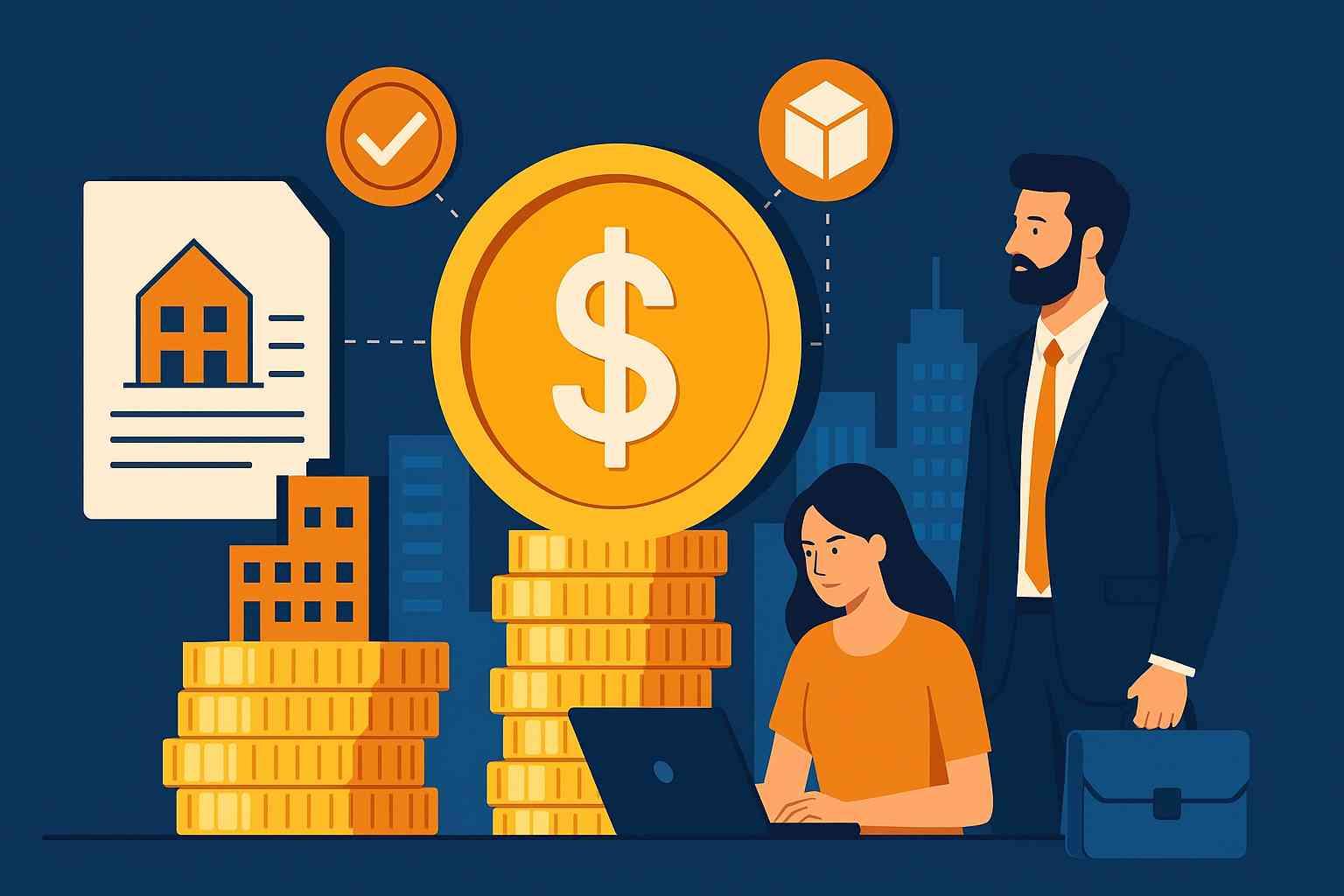
The rise of decentralized finance (DeFi) has transformed the traditional financial landscape, enabling peer-to-peer lending, borrowing, and trading without intermediaries. However, a significant limitation has been the shortage of tangible, real-world assets on these platforms. Tokenizing Real World Assets (RWA) bridges this gap by allowing physical or financial assets to be represented as blockchain-based tokens. This process not only increases liquidity but also enhances transparency, security, and accessibility for global investors. In this blog, we explore how to tokenize RWAs for DeFi platforms, step by step, along with the benefits, challenges, and use cases.
Understanding Real World Asset (RWA) Tokenization
Real World Asset tokenization refers to the process of creating digital tokens on a blockchain that represent ownership of physical or off-chain financial assets. These assets can range from real estate, commodities, art, bonds, and even invoices. By tokenizing RWAs, these assets become tradable on decentralized platforms, allowing fractional ownership and wider participation in markets that were previously illiquid or restricted.
Tokenization relies on smart contracts to enforce rules, rights, and obligations, ensuring that ownership, transfer, and revenue distribution are automated and transparent. Unlike conventional ownership, tokenized assets are programmable, enabling integration with lending protocols, DeFi investment products, and secondary markets. This innovation is reshaping the way investors interact with real-world assets, providing new opportunities for liquidity, access, and risk management.
Why Tokenize RWAs for DeFi Platforms?
Tokenizing real-world assets unlocks multiple benefits for both investors and platform developers. For DeFi platforms, RWAs bring diversification beyond crypto-native assets, which are often volatile. Investors gain exposure to stable, income-generating assets such as rental properties, corporate debt, or government bonds, while maintaining the flexibility of digital asset trading.
Additionally, tokenization allows for fractional ownership, lowering the entry barrier for retail investors. Instead of requiring millions to invest in a commercial property, investors can purchase a fraction of it through a token. This creates a more inclusive financial ecosystem and attracts a larger, global user base. Moreover, RWAs integrated into DeFi protocols can facilitate collateralized lending, yield generation, and securitization, enhancing the platform’s value proposition.
Types of Real World Assets Suitable for Tokenization
The first step in tokenization is identifying suitable RWAs. Typically, assets that have verifiable ownership, a stable market value, and potential for income generation are considered ideal candidates.
Real Estate: Residential and commercial properties can be tokenized to allow fractional ownership or rental revenue sharing.
Commodities: Gold, silver, oil, and other commodities can be digitized, allowing seamless trading and collateralization in DeFi protocols.
Financial Instruments: Bonds, loans, and invoices can be tokenized to improve liquidity and accessibility.
Intellectual Property: Patents, trademarks, or music rights can be represented as tokens, providing royalty-sharing opportunities.
The choice of asset depends on market demand, legal considerations, and the technical capability to integrate it with blockchain systems.
Legal and Regulatory Considerations
Tokenizing RWAs involves navigating complex legal and regulatory frameworks. Since tokenized assets often represent ownership rights, they fall under securities, property, or commodity laws depending on jurisdiction.
For example, real estate tokenization might require compliance with property registration laws and securities regulations. Similarly, tokenized bonds or debt instruments must adhere to financial and investor protection regulations. DeFi platforms must ensure KYC (Know Your Customer) and AML (Anti-Money Laundering) compliance to prevent illicit activities.
Legal frameworks also dictate how tokens are issued, transferred, and redeemed. Partnering with legal advisors and ensuring jurisdiction-specific compliance is essential to avoid legal disputes and protect investor interests.
Choosing the Right Blockchain for RWA Tokenization
Selecting the right blockchain is a critical step in the tokenization process. Factors such as scalability, transaction speed, cost, security, and smart contract functionality must be considered.
Ethereum: The most widely used blockchain for DeFi, Ethereum provides robust smart contract support and a large developer ecosystem. However, high gas fees can be a challenge.
Solana: Known for high-speed transactions and low fees, Solana is gaining traction for tokenization projects requiring fast execution.
Polygon: A Layer 2 solution on Ethereum, Polygon provides scalability and reduced fees while maintaining Ethereum compatibility.
Hyperledger or Corda: For private, permissioned networks, enterprise blockchains like Hyperledger or Corda can offer compliance and privacy advantages.
The choice of blockchain impacts user experience, liquidity, and interoperability with other DeFi platforms.
The Tokenization Process Step by Step
1. Asset Identification and Valuation
The first step is identifying a tangible or financial asset suitable for tokenization. Accurate valuation is essential to determine the token’s price and fractional ownership. Third-party appraisals, market analysis, and legal verification are critical during this phase.
2. Legal Structuring
After valuation, legal frameworks are established to define the rights associated with the token. Smart contracts are created to encode ownership, transferability, profit sharing, and redemption rights. Legal structures such as Special Purpose Vehicles (SPVs) are often used to hold the underlying asset on behalf of token holders.
3. Smart Contract Development
Smart contracts automate the rules of tokenized assets. They ensure that token holders can access dividends, transfer ownership, and participate in DeFi lending or staking protocols. Security audits are essential to prevent vulnerabilities that could lead to hacks or fund loss.
4. Token Minting
Once the smart contract is deployed, tokens representing fractional ownership are minted on the blockchain. These tokens are often ERC-20 (fungible) for divisible assets or ERC-721/ERC-1155 (non-fungible) for unique assets like art or real estate units.
5. Integration with DeFi Platforms
Tokens are then integrated with DeFi platforms for trading, lending, or yield generation. Liquidity pools, decentralized exchanges, and collateralized lending protocols allow token holders to utilize their digital assets efficiently.
6. Ongoing Compliance and Reporting
Continuous monitoring is required to ensure regulatory compliance, reporting of dividends or interest, and management of ownership rights. Smart contracts can automate certain compliance tasks, but human oversight is crucial for auditing and legal updates.
Benefits of RWA Tokenization in DeFi
Tokenizing RWAs brings numerous advantages for investors, platforms, and the financial ecosystem.
-
Liquidity: Traditionally illiquid assets like real estate or fine art become tradable on decentralized markets.
-
Fractional Ownership: Enables broader participation from retail investors with smaller capital.
-
Transparency: Blockchain records ensure tamper-proof ownership and transaction history.
-
Efficiency: Smart contracts automate ownership transfer, dividend distribution, and compliance.
-
Global Access: Investors worldwide can access tokenized assets without geographical limitations.
These benefits position RWAs as a vital component in making DeFi more mature and sustainable.
Challenges and Risks
Despite its potential, RWA tokenization faces several challenges:
-
Legal Complexity: Jurisdiction-specific regulations can limit the adoption of tokenized assets.
-
Valuation Issues: Accurately pricing off-chain assets for digital trading is challenging.
-
Liquidity Risks: Low demand or market participation can affect token liquidity.
-
Security Vulnerabilities: Smart contract bugs or hacks can compromise investor funds.
-
Operational Costs: Legal, technical, and auditing expenses can be substantial.
Addressing these challenges requires collaboration between blockchain developers, legal advisors, and financial experts.
Use Cases of Tokenized RWAs in DeFi
The practical applications of RWA tokenization in DeFi are diverse:
-
Real Estate Investment: Tokenized properties allow fractional ownership and rental income distribution through DeFi lending protocols.
-
Commodity Trading: Gold-backed tokens provide exposure to precious metals without physical handling.
-
Debt Instruments: Tokenized invoices or bonds facilitate faster settlement and collateralized lending.
-
Luxury Assets: Art and collectibles can be fractionalized, enabling new forms of investment and liquidity.
Each use case demonstrates how tokenization bridges real-world assets with decentralized financial systems, expanding access and efficiency.
Future of RWA Tokenization in DeFi
The future of RWA tokenization in DeFi looks promising, as regulatory clarity improves and technology advances. Institutional adoption is expected to increase, bringing large-scale assets such as infrastructure, commercial real estate, and corporate bonds into the digital ecosystem.
Integration with AI and data analytics will improve valuation, risk assessment, and trading strategies. Furthermore, cross-chain interoperability will enable tokenized assets to flow seamlessly between different DeFi protocols, increasing liquidity and utility. As the market matures, tokenized RWAs can redefine traditional finance and make DeFi a mainstream investment avenue.
Conclusion
Tokenizing real-world assets for DeFi platforms represents a transformative shift in finance, providing liquidity, accessibility, and transparency for investors globally. From real estate and commodities to financial instruments, tokenization democratizes asset ownership and integrates traditional finance into the decentralized ecosystem. While legal, technical, and operational challenges exist, careful planning, smart contract implementation, and regulatory compliance can mitigate risks and unlock significant opportunities.
As DeFi continues to grow, tokenized RWAs are set to become a cornerstone of a more inclusive, efficient, and liquid financial future, bridging the gap between traditional assets and digital finance.

 English
 Arabic
 French
 Portuguese
 Deutsch
 Turkish
 Dutch
Dutch
 Italiano
 Russian
 Romaian
 Portuguese (Brazil)
 Tiếng Việt