


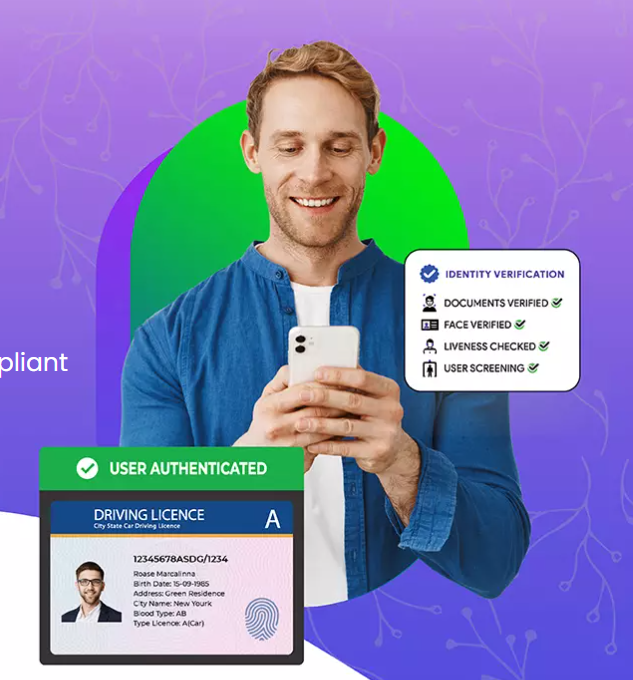
In today’s digital-first world, online identity verification has become a crucial element for businesses to prevent fraud, ensure compliance, and deliver secure user experiences. Among the most advanced verification methods are Certified Liveness Detection and Document Liveness Detection, two technologies that play a key role in differentiating genuine users from spoofing attempts or fraudulent documents.
What is Certified Liveness Detection?
Certified Liveness Detection is a sophisticated AI-driven process used to confirm that the person being verified is physically present during the identity verification process. Unlike traditional facial recognition systems that can be fooled by photos or videos, certified liveness detection uses deep learning models to analyze subtle facial movements, reflections, and depth cues to detect whether a real human is in front of the camera.
This certification ensures that the liveness detection technology meets global security and compliance standards such as ISO/IEC 30107-3 (Presentation Attack Detection). By achieving this certification, businesses can trust that the verification process is reliable, unbiased, and capable of identifying even advanced spoofing attacks such as 3D masks, deepfakes, or camera injection attacks.
What is Document Liveness Detection?
Document Liveness Detection is another layer of security in digital onboarding. It verifies that the ID document being scanned—such as a passport, driver’s license, or national ID—is genuine and physically present, not a copy, screenshot, or tampered version.
Using AI and computer vision, this technology examines document textures, holograms, edges, and micro-patterns to ensure authenticity. It also detects motion and light reflections, confirming that the document is being presented live to the camera. This step is crucial in preventing document spoofing and ensuring that only valid, government-issued IDs are accepted during KYC verification.
Why These Technologies Matter
Both certified liveness detection and document liveness detection help businesses across banking, fintech, insurance, and telecom sectors reduce onboarding fraud, meet AML/KYC regulations, and improve user trust. Together, they form a powerful defense against identity fraud and impersonation attempts, ensuring that every verified user is real and verified in real-time.
Final Thoughts
As fraudsters become more sophisticated, businesses must rely on certified liveness detection and document liveness detection to secure their digital identity verification workflows. By adopting these AI-driven technologies, organizations can provide seamless onboarding experiences while maintaining the highest levels of trust, compliance, and fraud protection.

 Arabic
 French
 Spanish
 Portuguese
 Deutsch
 Turkish
 Dutch
Dutch
 Italiano
 Russian
 Romaian
 Portuguese (Brazil)
 Tiếng Việt