


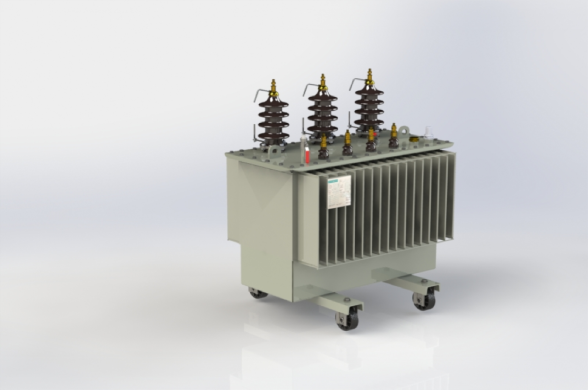
Electricity plays a key role in every part of modern life—whether it’s lighting homes, running industries, or powering schools and hospitals. To make sure electricity reaches these places safely and efficiently, transformers are used. Among various transformer capacities, the 100 kva transformer is a commonly used one because it perfectly balances capacity and performance for small and medium-scale applications. In this blog, we will explore how this transformer supports power distribution systems, its features, types, working principles, and practical applications.
1. Understanding the Basics of a Transformer
A transformer is an electrical device that changes voltage levels between circuits. In simple terms, it can increase (step-up) or decrease (step-down) the voltage of alternating current (AC) while maintaining the same frequency. This helps in transmitting electricity efficiently over long distances and using it safely in homes or industries.
When power is generated at a power station, the voltage is usually high. Before it can be used by machines or household appliances, it must be reduced. That’s where transformers come in—they make sure the voltage is just right for different purposes.
2. What is a 100 kVA Transformer?
The term 100 kVA transformer refers to a transformer with a capacity of 100 kilovolt-amperes (kVA). The unit "kVA" indicates the apparent power the transformer can handle. In simple words, this means the transformer can support up to 100,000 volt-amperes of electrical load safely and efficiently.
This capacity is suitable for commercial buildings, small factories, and institutions that require a moderate amount of electricity. It acts as a bridge between high-voltage supply lines and the devices or systems that need low-voltage power to operate.
3. Working Principle of a 100 kVA Transformer
A transformer works on Faraday’s Law of Electromagnetic Induction. It has two main coils—the primary winding and the secondary winding—wound on a magnetic core.
When alternating current flows through the primary coil, it creates a magnetic field. This magnetic field induces a voltage in the secondary coil. Depending on how many turns each coil has, the voltage is either increased or decreased.
-
If the secondary coil has fewer turns, it becomes a step-down transformer, reducing the voltage.
-
If the secondary coil has more turns, it becomes a step-up transformer, increasing the voltage.
For power distribution systems, the 100 kVA transformer usually works as a step-down transformer, converting high voltage from the main supply to a lower voltage suitable for use in buildings or factories.
4. Technical Specifications of a 100 kVA Transformer
While specifications may vary by design and manufacturer, here are some common details found in most 100 kVA transformers:
-
Rated Capacity: 100 kVA
-
Type: Oil-cooled or Dry-type
-
Frequency: 50 Hz (standard in India)
-
Primary Voltage: 11 kV (typical high voltage side)
-
Secondary Voltage: 415 V or 433 V (low voltage side)
-
Cooling Method: ONAN (Oil Natural Air Natural) for oil-filled types
-
Connection Type: Dyn11 or similar vector group
-
Insulation Class: Class A or Class F depending on temperature rating
These details ensure the transformer performs efficiently, safely, and reliably under different conditions.
5. Types of 100 kVA Transformers
The 100 kVA transformer comes in different designs to suit various environments and needs. Below are the main types:
a. Oil-Cooled Transformer
This type uses mineral oil for cooling and insulation. The oil absorbs heat from the windings and transfers it to the outer tank surface, where it dissipates into the air. Oil-cooled transformers are durable and commonly used outdoors or in industrial setups.
b. Dry-Type Transformer
Instead of oil, dry-type transformers use air for cooling. They are safer in environments where fire risk must be minimized, such as hospitals, schools, and commercial complexes.
c. Step-Up Transformer
These are used when there’s a need to increase the voltage level to transmit power over long distances efficiently.
d. Step-Down Transformer
Most 100 kVA transformers are step-down types, reducing voltage for use in buildings or industrial plants.
6. Role of a 100 kVA Transformer in Power Distribution Systems
Transformers are vital for stable and reliable power supply. Here’s how the 100 kVA model supports the overall system:
a. Voltage Regulation
It ensures that voltage levels remain consistent across all connected equipment, preventing damage due to sudden surges or drops.
b. Efficient Energy Distribution
By stepping down high transmission voltage to usable levels, the 100 kVA transformer allows electricity to be safely distributed to homes, offices, and small factories.
c. Reduced Transmission Losses
High voltage transmission minimizes energy loss. The transformer then brings the voltage down efficiently for end users.
d. Equipment Protection
Stable voltage output protects sensitive devices and machinery from electrical faults, extending their lifespan.
e. Load Management
A 100 kVA transformer can handle multiple connected loads, ensuring smooth operation even during high-demand periods.
7. Applications of a 100 kVA Transformer
This transformer’s balanced capacity makes it suitable for a wide range of applications. Some common uses include:
-
Commercial Buildings: To power lifts, lighting systems, and air-conditioning units.
-
Small Industries: For running machinery, welding units, and production lines.
-
Educational Institutions: To supply power for laboratories, computer rooms, and administrative blocks.
-
Hospitals: For medical equipment, lighting, and emergency backup systems.
-
Residential Complexes: To manage electricity supply for multiple apartments or gated communities.
-
Renewable Energy Systems: Used in solar or wind power installations to regulate voltage.
8. Maintenance and Safety Tips
Like any electrical equipment, transformers need regular care for long-term reliability. Here are a few essential maintenance and safety measures:
-
Check Oil Level (for oil-cooled types): Maintain the correct oil level and test the quality periodically.
-
Inspect for Leaks: Oil leaks or loose connections can lead to overheating and power loss.
-
Clean Regularly: Dust and debris can reduce cooling efficiency, especially for dry-type transformers.
-
Monitor Load: Avoid overloading the transformer to prevent overheating.
-
Conduct Insulation Tests: Ensure that insulation resistance meets standard values to avoid faults.
-
Follow Safety Protocols: Only trained personnel should handle maintenance tasks, as transformers deal with high voltage.
9. Benefits of Using a 100 kVA Transformer
Choosing the right transformer capacity can make a big difference in performance and cost-efficiency. Some major benefits include:
-
High Efficiency: Converts power with minimal losses.
-
Durability: Long lifespan with proper maintenance.
-
Compact Size: Ideal for medium-scale setups.
-
Versatility: Suitable for both indoor and outdoor use.
-
Cost-Effective: Offers good performance at reasonable installation and operating costs.
10. Conclusion
A 100 kVA transformer is an essential component in today’s power distribution network. It plays a key role in ensuring that electricity is transmitted safely, efficiently, and reliably from high-voltage lines to everyday applications. Whether used in industries, institutions, or residential areas, this transformer provides the perfect balance of performance and durability.
If you are looking for high-quality and dependable transformers, Prabha Power offers expertly designed solutions that meet modern energy needs. With a focus on reliability, safety, and efficiency, the brand ensures every power distribution system performs at its best.

 English
 Arabic
 Spanish
 Portuguese
 Deutsch
 Turkish
 Dutch
Dutch
 Italiano
 Russian
 Romaian
 Portuguese (Brazil)
 Tiếng Việt