


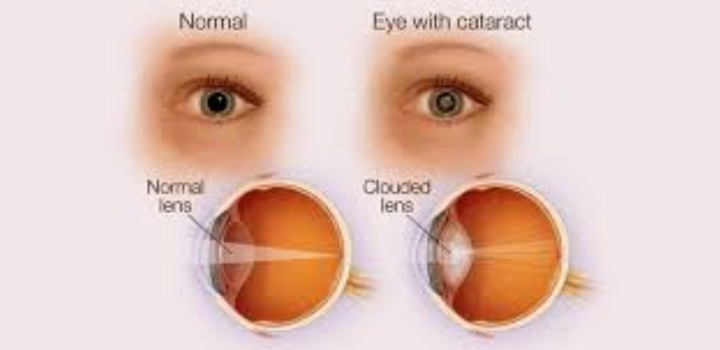
Cataracts (also known as “motiyabind”) develop when the eye’s natural lens, responsible for focusing light onto the retina, becomes cloudy leading to blurred vision. This common condition is one of the main causes of cataract eye disease, which occurs when proteins in the lens clump together, reducing transparency and blocking light from passing clearly through. The lens functions best when it remains clear, much like a camera lens. However, as we age, these protein changes increase cloudiness, resulting in blurriness and heightened sensitivity to glare. While ageing is a primary cause, other causes of cataract eye disease include eye injury, genetic factors, certain medications, and health conditions such as diabetes.
In this article, we'll delve into the causes of cataracts or reason of motiyabind, the risk factors involved, how they develop, and the impact they have on your vision.
How cataracts develop and their impact on vision?
Cataracts develop as the proteins in the eye's lens start to clump together and cloud the lens. Over time, your vision may become blurry, and you might notice increased difficulty seeing at night or in bright light. Colours may appear faded, and glare from oncoming headlights or the sun can become problematic. If left untreated, cataracts can lead to severe visual impairment and, if the patient has cataract in both eyes, it can be the reason for complete blindness.
What causes cataracts?
Cataracts, a common eye condition, develop when the natural lens inside the eye becomes cloudy, leading to blurred vision. There are several cataract causes or reason of motiyabind, including the following:
• Ageing – the primary cause of cataract
Age gracefully, they say, but ageing is the primary cataract cause.
As you get older, the proteins in your eye's natural lens may break down and clump together, clouding your vision. This type is known as age-related cataracts and is one of the most common. Though cataract can be congenital and form at young age due to certain conditions, it is primarily an age-related eye problem and so age is the primary cause of cataract. Cataract generally appears after the age of 50.
The lens of the eye, which is responsible for focusing light onto the retina, is typically clear. With ageing, proteins within the lens may denature and clump, creating opacities. Cataracts are caused by these opacities, which scatter and block the passage of light, leading to blurred vision and reduced clarity.

 English
 Arabic
 French
 Spanish
 Portuguese
 Deutsch
 Turkish
 Dutch
Dutch
 Russian
 Romaian
 Portuguese (Brazil)
 Tiếng Việt