


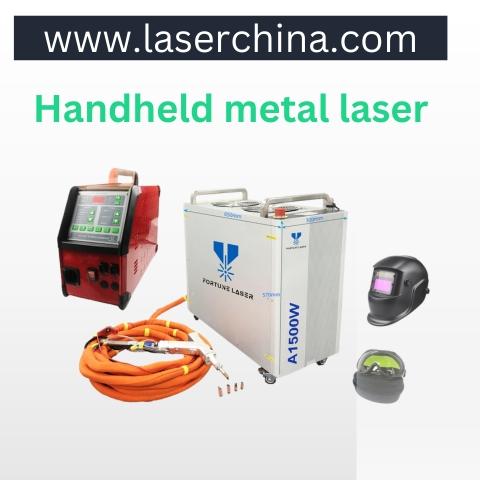
The handheld metal laser has become a vital innovation in today’s industrial landscape, bridging the gap between precision and portability. It provides a faster, cleaner, and more efficient way to work with various metals—ranging from steel and aluminum to copper and titanium. From manufacturing workshops to repair facilities, this technology is reshaping how professionals cut, clean, and weld metals with unprecedented control and minimal waste.
Unlike traditional mechanical or chemical processes, handheld metal laser systems deliver pinpoint accuracy without direct contact. They operate through concentrated light energy that interacts with the metal surface, producing clean and consistent results. The combination of compact design and robust performance makes these systems a top choice for businesses aiming to enhance productivity and quality at the same time.
The Technology Behind Handheld Metal Laser
At its core, a handheld metal laser system uses a high-energy laser beam that can be precisely focused on a specific point. The intensity and wavelength of the beam are adjusted based on the metal type and desired outcome—be it cleaning, engraving, or welding. Fiber laser technology is most commonly used due to its efficiency, long lifespan, and minimal maintenance requirements.
The equipment includes three primary components:
-
Laser Source: Generates the powerful, focused beam.
-
Control Unit: Regulates power, frequency, and beam characteristics.
-
Handheld Head: Allows operators to move freely while targeting exact areas of the metal surface.
This combination enables professionals to perform delicate work without extensive setup or material handling. The result is precise surface treatment that meets the rigorous standards of industrial production and restoration.
Applications Across Industries
The adaptability of the handheld metal laser is what makes it indispensable. It’s not restricted to one function—it serves multiple roles across numerous sectors.
1. Manufacturing and Fabrication:
Manufacturers use handheld metal lasers for tasks like surface preparation, welding seams, and finishing. It ensures strong bonds between parts and a refined appearance without secondary polishing or grinding.
2. Automotive Industry:
In car body repair, the handheld metal laser helps remove rust, paint, or oxide layers quickly. It’s also effective for welding dissimilar metals used in modern vehicles.
3. Aerospace and Defense:
Precision and material integrity are crucial in aerospace applications. Handheld metal laser systems are employed for fine welding of components and non-destructive cleaning of metal parts.
4. Maintenance and Restoration:
The technology is widely used in maintaining tools, molds, and equipment. It can restore old or corroded metal surfaces without damaging the base material.
5. Electronics and Toolmaking:
When dealing with micro-components, the laser ensures clean joints and edges. It provides consistent results that traditional soldering or cleaning methods cannot achieve.
Why Industries Are Switching to Handheld Metal Lasers
Industrial operations are constantly seeking methods that save time, reduce operational costs, and improve accuracy. The handheld metal laser provides all these elements in a single solution. Its design allows operators to move around freely without needing fixed machinery.
The non-contact nature of the process eliminates mechanical stress on materials. Moreover, since the system uses light energy, there’s no need for abrasive materials or chemical solvents. This makes it cleaner and safer for both operators and the environment.
The handheld format also means easier integration into existing production lines. Whether a small repair shop or a high-tech manufacturing unit, this tool adapts seamlessly without requiring major infrastructure changes.
The Cleaning Power of Light
One of the most revolutionary uses of the handheld metal laser is surface cleaning. Conventional methods like sandblasting or chemical stripping can damage the surface or leave residues. The handheld laser, however, uses controlled light pulses to vaporize contaminants such as rust, oil, and oxide layers.
This method ensures the base metal remains intact while achieving an immaculate finish. Operators can fine-tune the settings to match surface conditions, giving full control over depth and intensity. The cleaning process is fast, consistent, and doesn’t produce secondary waste, making it ideal for industries that value precision and environmental responsibility.
The Role in Welding Operations
In welding, precision and strength are everything. Handheld metal laser welders offer the ability to join metals with minimal heat distortion and a clean seam. This is achieved by controlling laser energy distribution, allowing it to penetrate metal surfaces precisely where needed.
The result is smooth, strong welds without the need for extensive post-processing. Such systems have become a mainstay in industries requiring high structural integrity and aesthetic quality, such as aerospace, electronics, and high-end manufacturing.
Furthermore, handheld laser welding units often come with integrated cooling systems and ergonomic designs that make prolonged use more comfortable for operators. These features contribute to better workflow and consistent quality over extended production runs.
Economic and Operational Efficiency
The long-term operational cost of handheld metal lasers is lower compared to conventional tools. There are no consumables like sand, solvents, or filler materials. Additionally, downtime is reduced because cleaning and maintenance needs are minimal.
Laser systems are energy-efficient and require less manual intervention, resulting in faster project turnaround. For businesses, this translates to higher throughput, better consistency, and improved profitability.
The compact size also means lower transportation and setup costs. Companies with multiple workstations can easily move one unit between tasks, enhancing flexibility and optimizing production flow.
Precision in Every Detail
Accuracy is where handheld metal laser technology truly excels. The laser beam can be controlled within micrometers, allowing for intricate detailing or selective area processing. This makes it suitable not only for heavy-duty industrial use but also for artistic metalwork and delicate restoration.
By providing precise energy control, the handheld metal laser ensures that no unwanted material is removed or overheated. It maintains structural integrity and preserves fine details on even the most complex parts.
Environmental and Workplace Impact
A major shift toward handheld metal lasers also stems from the growing demand for environmentally sustainable operations. Since the laser process does not use harmful chemicals or abrasives, it minimizes waste generation and pollution.
Operators benefit as well—there is less dust, vibration, and noise compared to mechanical cleaning or welding methods. The process also reduces the risk of contamination or health hazards that are common in chemical-based techniques.
By integrating these systems, industries contribute to cleaner, safer, and more sustainable production environments without sacrificing quality or speed.
Final Thoughts
The handheld metal laser represents a major step forward in metal processing technology. It combines mobility, power, and precision in a way that aligns with the modern industrial demand for efficiency and sustainability. Whether for cleaning, welding, or restoration, it delivers consistent performance and superior control.
As industries continue to evolve toward automation and smart manufacturing, the role of handheld metal lasers will only grow stronger. Their ability to enhance productivity, reduce waste, and improve quality makes them a defining tool of next-generation metalworking.
This technology isn’t just about replacing older methods—it’s about redefining how metal processing is done, setting a new benchmark for accuracy, speed, and environmental responsibility.

 English
 French
 Spanish
 Portuguese
 Deutsch
 Turkish
 Dutch
Dutch
 Italiano
 Russian
 Romaian
 Portuguese (Brazil)
 Tiếng Việt