


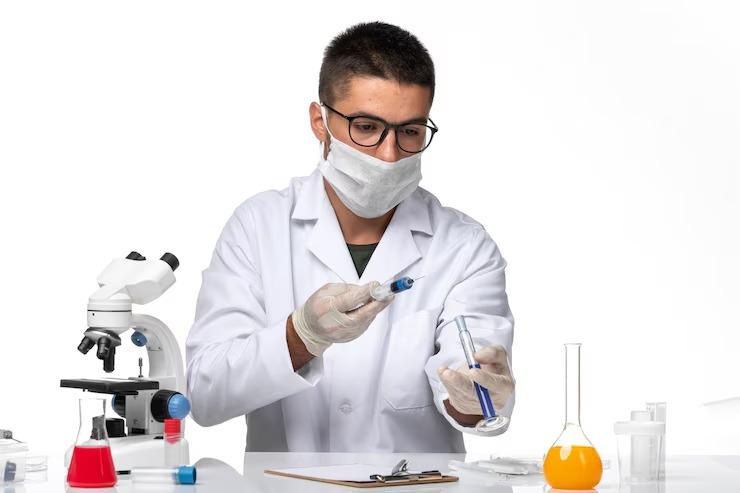
When I first started working with proteins in the lab, I quickly realized that purification is one of the most critical steps in any biochemical or molecular biology project. Whether you're developing therapeutic proteins, studying enzyme kinetics, or performing structural analysis, obtaining pure and active protein is essential. Among the many purification methods available, affinity chromatography stands out as one of the most powerful and selective techniques for isolating proteins efficiently and with high purity.
In this blog, I’ll walk you through everything you need to know about protein purification affinity chromatography—from its principles to its applications and how to implement it effectively in your lab setup.
Understanding Protein Purification and Why It Matters
Protein purification is the process of isolating a single type of protein from a complex mixture, such as a cell lysate or tissue extract. This step is crucial because proteins often exist in very small amounts within biological systems, and their activity or structure can easily be affected by impurities.
Affinity chromatography provides a way to selectively isolate proteins based on highly specific interactions between the target molecule and a binding partner. These interactions can mimic natural biological recognition processes, such as antibody-antigen or enzyme-substrate binding. This specificity gives affinity chromatography an edge over conventional methods like ion-exchange or gel filtration chromatography.
When done correctly, the result is a highly purified protein that retains its native conformation and biological activity—ready for downstream applications such as enzyme assays, crystallization, or therapeutic development.
The Basic Principle of Affinity Chromatography
Affinity chromatography operates on the principle of molecular recognition. The idea is to exploit a protein’s affinity for a specific ligand that can be immobilized on a stationary matrix.
Here’s how the process works:
- Immobilization of the Ligand:
A ligand that binds specifically to the target protein is chemically attached to a solid matrix, typically made of agarose, sepharose, or magnetic beads. - Binding Phase:
The crude protein mixture is passed through the column. The target protein binds selectively to the ligand, while other non-specific proteins flow through. - Washing Phase:
The column is washed with buffer to remove any loosely bound contaminants. - Elution Phase:
The bound protein is then released (eluted) from the column, typically using a buffer containing a competitive molecule, a pH change, or a denaturing agent. - Regeneration:
After elution, the column is washed and stored for future use.
If you’re curious about optimizing this process for your experiments, click for more on how affinity chromatography can be adapted for specific protein types and research applications.
Common Ligands Used in Affinity Chromatography
Different proteins require different ligands depending on their structure, function, or tag type. Here are some of the most widely used affinity systems:
- His-tag/Ni-NTA Affinity:
Proteins engineered with a histidine tag (His-tag) bind to nickel-nitrilotriacetic acid (Ni-NTA) or cobalt ions. This method is extremely common for recombinant proteins expressed in E. coli. - Protein A or G Affinity:
These ligands bind specifically to the Fc region of antibodies, making them ideal for immunoglobulin purification. - Glutathione (GSH):
Used for proteins tagged with glutathione-S-transferase (GST). - Streptavidin or Avidin:
Ideal for biotin-tagged proteins or peptides. - Lectin-Based Affinity:
Used for glycoprotein purification by exploiting carbohydrate-binding lectins.
Each of these ligand systems has its unique advantages, depending on the protein’s properties and the intended downstream use.
Advantages of Affinity Chromatography
When I first implemented affinity chromatography in my workflow, the results were transformative. The process dramatically simplified purification, saved time, and provided remarkable yield and purity. Here are the key advantages that make this technique so popular:
- High Selectivity:
Only proteins with specific binding affinity for the ligand are retained, minimizing contaminants. - Efficiency:
It often achieves purification in a single step compared to multi-step conventional methods. - Preservation of Protein Function:
The mild binding and elution conditions help preserve the native structure and biological activity. - Scalability:
It can be used for both small analytical applications and large-scale industrial production. - Reusability of Columns:
With proper maintenance, affinity columns can be regenerated and reused multiple times, making them cost-effective.
If you’re setting up a new purification workflow, click for more on selecting the right affinity system for your target protein and scale of operation.
Challenges and Limitations
While affinity chromatography is powerful, it’s not without challenges. Early on in my work, I learned that the method’s success depends heavily on choosing the right ligand and maintaining column stability. Some common issues include:
- Non-Specific Binding:
Despite its selectivity, some unwanted proteins can still bind non-specifically, leading to impurities. - Ligand Leakage:
The ligand may detach from the matrix over time, contaminating the eluted protein. - Elution Difficulties:
Harsh elution conditions may denature sensitive proteins or affect their functionality. - Cost:
The materials and ligands, especially for large-scale processes, can be expensive. - Tag Removal:
In tagged systems like His-tag purification, the tag may need to be removed before further applications, requiring additional steps.
By understanding and addressing these challenges, you can significantly improve the yield and stability of your purified proteins.
Applications of Affinity Chromatography
Affinity chromatography has applications across numerous scientific and industrial domains. I’ve personally used it in multiple contexts, from academic research to applied biotechnology. Some of its most common applications include:
- Recombinant Protein Purification:
For isolating engineered proteins expressed in bacteria, yeast, or mammalian systems. - Antibody Purification:
Essential for producing high-purity monoclonal and polyclonal antibodies for diagnostics and therapeutics. - Enzyme Isolation:
For studying enzyme kinetics, structure, and catalytic mechanisms. - Protein-Protein Interaction Studies:
Used in pull-down assays to identify binding partners of target proteins. - Vaccine Development:
For purifying antigenic proteins used in vaccine formulations. - Pharmaceutical Production:
Affinity chromatography plays a vital role in large-scale purification of therapeutic proteins and biologics.
Key Steps for Optimizing Affinity Chromatography
To get the most out of affinity chromatography, it’s important to optimize each step. Here are a few strategies that I’ve found to consistently yield the best results:
- Buffer Optimization:
Choose buffers that maintain protein stability and support strong but reversible binding. - Flow Rate Control:
Slow flow rates during binding and washing phases improve interaction and purification efficiency. - Temperature Management:
Keep purification at low temperatures (typically 4°C) to prevent protein degradation. - Column Regeneration:
Clean columns thoroughly after each use to prevent cross-contamination and ensure consistent results. - Tag Cleavage (if applicable):
Use proteases like TEV or thrombin to remove affinity tags when necessary. - Analytical Validation:
Use SDS-PAGE or western blotting to confirm purity and molecular weight.
These steps ensure that the purified protein retains both its integrity and functionality, which is essential for research or therapeutic applications.
Industrial Scale Affinity Chromatography
In industrial settings, affinity chromatography is often scaled up for biopharmaceutical production. Automation and process control are key in such environments. The columns used are larger, and the ligands must be stable under repeated cycles.
Companies focusing on protein manufacturing often invest heavily in this technology because of its ability to maintain high purity and consistency across batches. Partnering with experienced service providers, like Lytic Solutions, LLC, can streamline this process from development to production, ensuring quality and regulatory compliance.
Emerging Trends in Affinity Chromatography
The field of affinity chromatography continues to evolve. Researchers and bioprocess engineers are constantly developing new ligands, materials, and purification platforms. Some exciting advancements include:
- Magnetic Bead-Based Purification:
Ideal for small-scale and rapid purification workflows. - Monolithic Columns:
Offering higher flow rates and faster separations. - Recombinant Ligands:
Engineered for improved stability and specificity. - Membrane Chromatography:
Used for high-throughput applications and reduced processing time.
These innovations aim to make purification faster, more efficient, and more scalable, especially for modern biomanufacturing processes.
Final Thoughts
From my experience, protein purification affinity chromatography remains one of the most effective and reliable techniques for isolating high-quality proteins. Its versatility, combined with its ability to deliver exceptional purity and yield, makes it an indispensable part of biochemical research and biopharmaceutical production.
Whether you’re purifying a recombinant protein for structural studies or preparing antibodies for clinical applications, affinity chromatography provides the control and precision needed to ensure success.
For researchers or businesses looking to implement efficient and high-yield purification workflows, reaching out to experts who specialize in customized protein purification services can make a huge difference.
If you want to explore tailored solutions for your specific protein purification needs, contact us today to discuss your project requirements and purification goals.

 English
 Arabic
 French
 Spanish
 Portuguese
 Deutsch
 Turkish
 Dutch
Dutch
 Russian
 Romaian
 Portuguese (Brazil)
 Tiếng Việt