


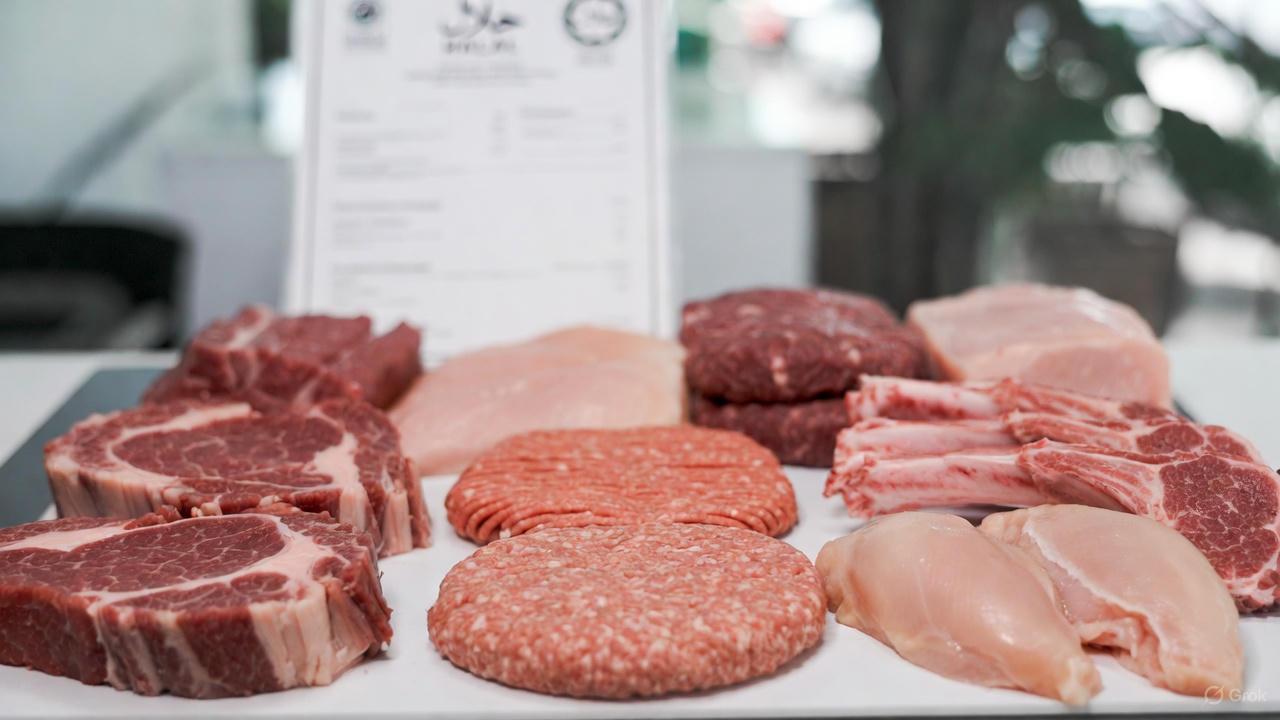
Expanding your meat export business into Muslim-majority markets requires more than quality products; it demands strict adherence to Islamic dietary laws. Halal certification has become a mandatory passport for accessing the global Islamic economy, valued at over $2 trillion annually. American meat producers who obtain proper halal credentials unlock access to 57 Muslim-majority countries and growing Muslim populations in Europe and Asia.
This guide provides meat exporters with actionable intelligence on securing legitimate halal credentials, meeting international standards, and avoiding costly certification mistakes that can derail shipments and damage business relationships.
Why Halal Certification is Essential for Meat Exporters
Muslim consumers represent 25% of the global population, and their purchasing decisions strictly follow halal guidelines. For meat exporters, this isn’t merely a niche market opportunity—it’s a fundamental requirement for market entry. Without valid halal credentials, your products face automatic rejection at ports in Indonesia, Malaysia, Saudi Arabia, UAE, and other key destinations.
The certification demonstrates that your meat products comply with Islamic law regarding animal welfare, slaughter methods, processing hygiene, and supply chain integrity. Major importing nations maintain government-appointed Islamic bodies that audit and approve foreign certification agencies. These authorities cross-reference every shipment against their approved list of certifiers. A certificate from an unrecognized body results in immediate product detention and potential destruction.
Beyond market access, halal certification builds consumer trust and brand loyalty. Muslim communities share information about reliable halal brands through social networks and community organizations. Earning certification from a reputable authority provides a marketing advantage that competitors without credentials cannot match. The investment in proper certification typically generates ROI within the first year through access to premium markets and reduced border delays.
Core Principles of Halal Meat Production
The foundation of halal compliance begins with animal handling and slaughter. Halal meat slaughtered according to Islamic principles requires specific conditions that differ significantly from conventional commercial slaughter. Animals must be alive and healthy at the time of slaughter, and the process must be performed by a mentally sound Muslim of appropriate age who recites the proper invocation to Allah.
The slaughter method mandates a swift, deep incision to the throat, cutting the carotid arteries, trachea, and esophagus while leaving the spinal cord intact. This technique ensures rapid blood drainage, which is critical for both religious compliance and meat quality. Stunning methods are permissible in some jurisdictions but must be reversible and cannot kill the animal before slaughter. Exporting companies must document their stunning protocols clearly, as acceptance varies by importing country.
Facility requirements include dedicated halal production lines or thorough sanitization procedures between halal and non-halal processing. All equipment, utensils, and surfaces contacting halal meat must be free from contamination by prohibited substances, including pork products and alcohol-based sanitizers. Staff training programs must educate employees about halal principles and implement rigorous separation protocols.
Six Critical Halal Meat Certification Requirements
Meeting halal meat certification requirements involves six non-negotiable elements that certification bodies scrutinize during audits. First, your facility must maintain complete traceability from farm to final packaging. This includes documenting animal origins, feed sources, and transportation methods to ensure no cross-contamination with non-halal products occurred.
Second, you need qualified Muslim slaughter personnel who can provide proof of their religious credentials and training certificates. Third, your water systems and facility cleaning protocols must exclude alcohol-based cleaners and pork-derived substances. Fourth, storage and transportation require dedicated halal-certified containers and vehicles, or validated cleaning procedures that certification auditors can verify.
Fifth, your labeling and packaging must clearly display halal logos, certification numbers, and production dates in formats acceptable to target markets. Sixth, you must implement a robust internal halal assurance system with appointed halal supervisors who conduct regular compliance checks and maintain audit-ready documentation.
Failure in any single area results in certification denial or revocation. Smart exporters address these requirements before the official audit, conducting internal assessments and mock inspections to identify and correct gaps.
The Step-by-Step Certification Process
Securing Halal Certification for Meat follows a structured path that typically spans 8-12 weeks. The journey begins with selecting an internationally recognized certification body approved by your target markets. Submit a detailed application including facility diagrams, product lists, and current standard operating procedures.
The certifier conducts a preliminary document review, identifying potential compliance issues. Address these concerns before scheduling the on-site audit. During the facility inspection, auditors observe actual slaughter and processing operations, interview staff, and review records for at least three months of production history.
If the audit reveals minor non-conformities, you’ll receive a corrective action report with a 30-day remediation window. Major non-conformities require a re-audit. Once compliant, the certification body issues your official credentials and lists your facility in their directory of approved exporters.
Annual surveillance audits maintain your certification status, with unannounced inspections possible. Most certifications require renewal every three years, involving a complete re-audit of your operations. Budget approximately $3,000-$8,000 for initial certification and $1,500-$3,000 annually for surveillance audits.
For companies managing complex international shipments, halal certification services for meat export can streamline this process by providing pre-audit consulting, documentation preparation, and liaison services with certification bodies. These specialized agencies help expedite timelines and prevent costly errors.
Documentation: Securing Your Halal Meat Certificate
Your halal meat certificate serves as the primary compliance document for customs officials and importing authorities. This certificate must accompany every shipment and include specific data points: certification body name and logo, unique certificate number, issue and expiration dates, exporter name and address, product description with HS codes, production batch numbers, and net weight.
The certificate requires original signatures from authorized certifying officials and must be issued after production, not before. Many countries demand certificates dated within specific timeframes—often 30 days of shipment. Digital certificates are gaining acceptance but verify that your target market recognizes electronic documentation before relying on them.
Maintain a certificate registry tracking issuance dates, shipment destinations, and product batches. This registry proves invaluable during traceability audits and when responding to customer inquiries. Lost or invalid certificates can strand shipments at ports, generating demurrage fees and potential product spoilage.
Choosing Your Certification Partner
Selecting the right certification body determines your market access and credibility. Verify that the certifier appears on the approved lists of your primary target countries. Malaysia’s JAKIM, Indonesia’s MUI, and Saudi Arabia’s SFDA maintain publicly accessible databases of recognized foreign certification bodies.
Evaluate each certifier’s industry experience, audit team qualifications, and customer service responsiveness. Request references from other meat exporters and check for any history of certificate suspensions in target markets. The cheapest option often proves most expensive if importing authorities question their credibility.
Companies seeking reliable halal meat certification USA should prioritize bodies with strong domestic presence and international recognition. For exporters needing streamlined compliance support, halalwatch.us offers specialized guidance connecting American meat producers with accredited certification bodies recognized across Middle Eastern and Southeast Asian markets. Their platform simplifies the complex process of matching your specific products with appropriate certifiers.
Final Steps for Export Success
Success in halal meat export requires treating certification as an ongoing operational priority rather than a one-time checkbox. Develop relationships with your certification body’s audit team, staying ahead of regulatory changes in target markets. Join industry associations like the American Halal Association to receive updates on evolving requirements and maintain connections with experienced exporters.
Invest in staff training programs that refresh halal knowledge quarterly and document participation. Create a compliance calendar tracking audit dates, certificate expirations, and regulatory updates for each destination country. This proactive approach prevents last-minute scrambles and demonstrates your commitment to halal integrity.
Monitor your supply chain continuously, as changes in feed suppliers, transportation vendors, or processing equipment can affect compliance. Notify your certification body immediately of significant operational changes to maintain transparency and avoid certification gaps.
The halal meat export market rewards diligent preparation and punishes shortcuts. American producers who implement robust halal systems and partner with recognized certification bodies position themselves for sustained growth in this lucrative and expanding global market. Your certification investment secures not just market access, but the trust of millions of consumers who prioritize halal integrity in their dietary choices.

 English
 Arabic
 French
 Spanish
 Portuguese
 Deutsch
 Turkish
 Italiano
 Russian
 Romaian
 Portuguese (Brazil)
 Tiếng Việt